
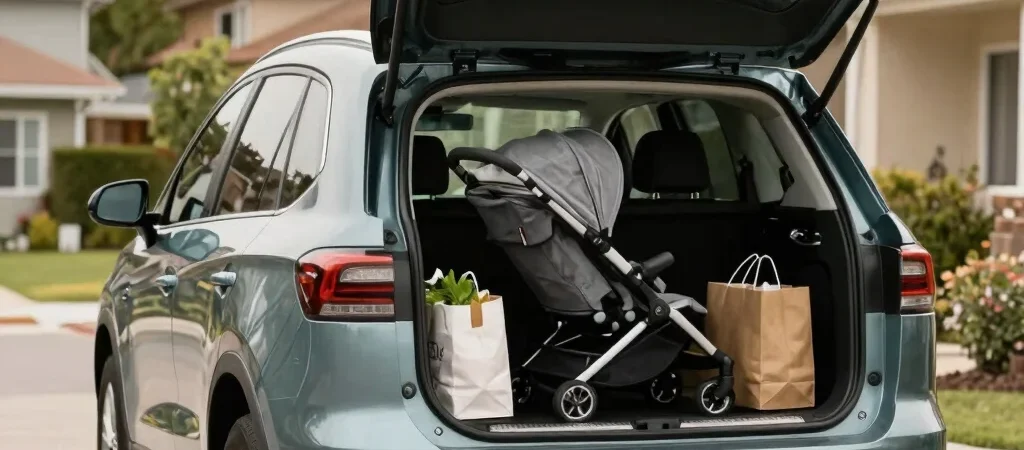
The most revealing family-car test can happen before a test drive: stand beside the car with your stroller, child seat, and the bags you usually carry. Published dimensions help narrow the field, but the shape of a cargo opening and the space around a rear door can matter more than a headline capacity figure.
Bring your real-life kit
Try fitting the child seat you actually use, and check how easily an adult can reach the buckle. Open the cargo area and see whether the stroller can go in without a puzzle of folding and shifting; leave room for the groceries or sports gear that normally travel with it. If a dealer visit is not practical, compare measured interior dimensions and seek out clear views of the specific trim and seating layout.
Compare the exact trim
Equipment can differ between trim levels, model years, and regions, so a feature described for one version may not come with another. Check the manufacturer’s specifications and confirm safety and convenience features for the exact vehicle you are considering. For safety ratings, consult the relevant official testing organizations and make sure the model year and configuration match.
Look beyond the sticker
Fuel or charging needs, insurance, service access, and the way you use the car all contribute to its value over time. A spacious vehicle may suit a family that regularly carries passengers, while a smaller option could be easier to park and live with on a crowded street. The right verdict should make that trade-off visible rather than treating size or purchase price as the entire argument.
Make a shortlist, then verify the details against the exact model year and trim before you visit a dealer. HandleClients may earn a commission from affiliate links, including eligible dealer listings; those links should be identified clearly and should not stand in for a transparent comparison.
